Speed is quietly costing you revenue.
Once LCP drifts past 2.5s, conversion usually falls and paid traffic gets less efficient.

Faster pages convert better and cost less to run. We move Magento stores to a Laravel stack you own, with every URL and ranking carried across at launch.
Trusted by BSB, MEVGAL, MyMarket, and GS Diamonds, with clients across Greece, Germany, the Netherlands, Romania, Poland, the UK, and Australia.
It worked once. Now it slows the storefront, the team, or both.
Slower pages, higher platform spend, and commercial logic that no longer fits the stack.
Once LCP drifts past 2.5s, conversion usually falls and paid traffic gets less efficient.
Magento Commerce licensing, hosting, and the Adobe ecosystem add up fast.
Custom logic usually lives in extensions that break on patches and make every upgrade heavier than it should be.
Specifically on Magento: Magento brands hit the same wall: heavy upgrades, rising hosting cost, and a stack that gets harder to change every year.
A production stack that cuts dependency on paid extensions and handles ERP, checkout, and B2B logic cleanly.
Lower operating cost, faster releases, and a codebase shaped to how the business actually sells.
If the concern is “custom Laravel is risky”
A mature framework with a large ecosystem, strong documentation, and a real hiring market.
You own the codebase, data model, and infrastructure decisions. No vendor controls exports or pricing.
Built on a standard Laravel stack and documented for handover, so another senior team can step in if needed.
Side by side
| Operating area | Magento typical state | Netstudio / Laravel target state |
|---|---|---|
| Typical storefront LCP | 3–6s on mobile | ~1.5s verified field data |
| Recurring platform cost | License / tier / per-order fees plus paid extensions | Hosting + team. No per-order fees. |
| Customisation velocity | Workaround extensions or wait on vendor roadmap | New features shipped in days, natively |
| B2B + B2C in one codebase | Separate tier, app, or parallel store | Single codebase, per-account catalogues |
| Data ownership | Vendor-controlled. Export on their terms. | Full data. Yours, contractually. |
| Support when checkout breaks | Ticket queue, SLA hours | Direct Slack to the engineers who built it |
When checkout breaks during peak, you need a senior engineer on the line within minutes.
Support matters because revenue-critical flows need to stay stable under pressure.
Audit first, map everything, build in parallel, then stabilise after launch.
Initial discovery
Audit speed, conversion, integrations, and infrastructure cost. Output: a clear go / no-go.
Migration blueprint
Map products, customers, orders, redirects, integrations, and custom logic. Then fix scope, price, and timeline.
Build and data migration
Build the new store in parallel, preserve SEO, and cut over with no downtime. Larger catalogues and deeper ERP work extend the timeline.
Launch and stabilisation
Go live with monitoring on every critical path, train the team, and stabilise with the same people who shipped it.
Public case studies with verified speed and operating proof.
Fashion retail, Greece. Rebuilt for speed and stock visibility.

1.5s
Verified LCP after rebuild.
15
Physical stores connected to the storefront.
CRM view
Order history, basket value, and customer profile visibility in one place.
Ops, two weeks post-launch
“Make it slower. We can’t keep up with the orders.”
Luxury fashion, Greece. Built to launch a premium collection without slowing the storefront.

~1.0s
Target load time, delivered on launch.
Findastic
Search built to handle greeklish, typos, and synonym-based product discovery.
Dark theme
A dedicated premium visual layer for the Vassilis Zoulias eveningwear collection.
“The end result was beyond every expectation.”
Enterprise jewelry commerce, Australia. Rebuilt for scale and live inventory.
500K
Diamonds in live inventory, indexed and searchable.
500K+
Additional SKUs layered on the same commerce engine.
3 rebuilds
Prior agency attempts before Netstudio took over.
Three rebuilds failed in seven years before this one stuck.
Dairy FMCG, Greece. Wholesale ordering built for distributor and trade-account workflows.
Trade portal
Authenticated ordering flows built only for wholesale accounts and distributors.
2 steps
Fast re-order checkout tuned for repeat B2B buyers.
Per-account catalogs
Assortment and pricing personalised to each wholesale buyer.
Distributors reorder in two steps, on catalogues priced per account.
The usual gating concerns: framework choice, SEO risk, economics, and support.
No, if the migration is run properly. URLs, redirects, metadata, and structured data are preserved at launch.
Every URL is mapped in the blueprint phase, with redirects, canonicals, metadata, and structured data carried across.
Most migration projects land between € 40K and € 180K. Hosting and support usually start around € 1.5K/month.
Usually within 12–18 months through conversion lift, lower platform cost, and fewer paid extensions.
We build it. New features ship on your timeline instead of a vendor roadmap.
Yes. We support clients in English across EU time zones and already work with brands across Greece, Germany, the Netherlands, Romania, Poland, the UK, and Australia.
Every extension and customisation is audited first. Critical logic is rebuilt natively, and workaround logic usually disappears.
The new stack is built in parallel, then products, customers, orders, media, and redirects are reconciled at cutover. We already support catalogues above 500K SKUs.
Yes. Discovery can happen now, build can follow after peak, and launch lands in the quieter window you choose.
Strong. We already run B2C storefronts, B2B portals, per-account catalogues, and store integrations on the same codebase.
Share the platform, integrations, and the constraint. You’ll leave with a direct read on whether migration makes sense.
Clear guidance on cost, timing, release friction, and integration complexity.
Performance
Core Web Vitals and first bottlenecks.
Operating costs
Platform fees, apps, hosting, and maintenance drag.
Integrations
ERP, warehouse, B2B, checkout, and workflow complexity.
Support
How support works after launch and during peak.
What comes back
The commercial promise only holds if the team and operating model behind it are stable for the long term.
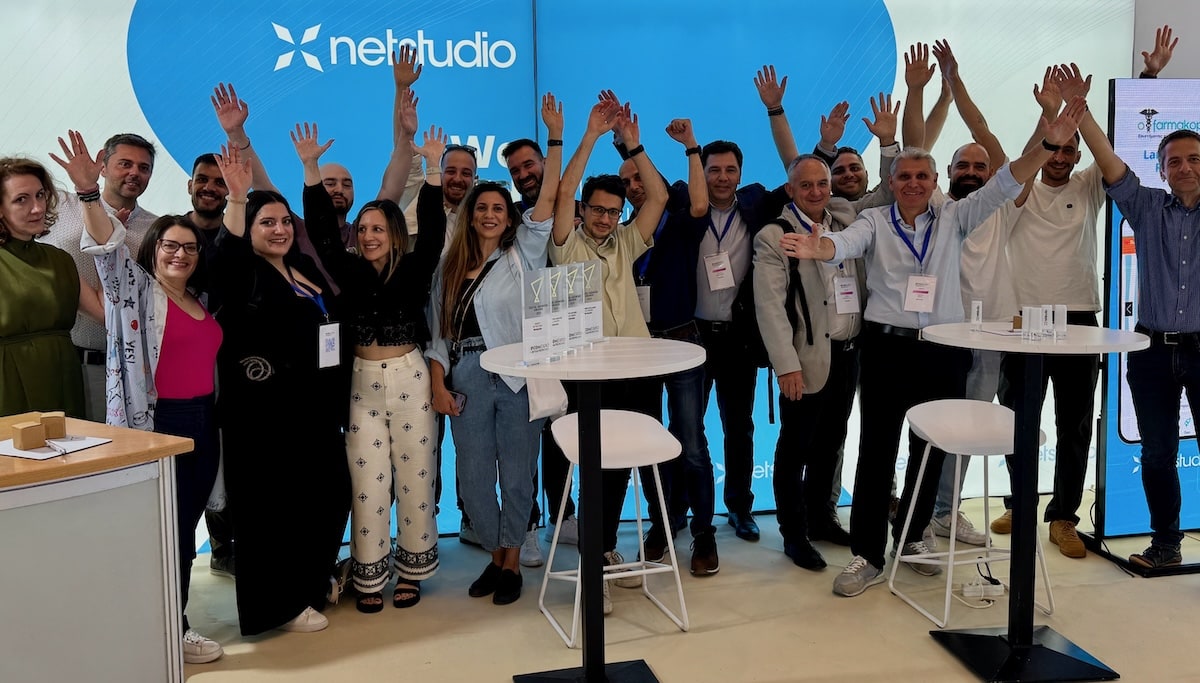
Netstudio team · Athens · 2025
One in-house team across engineering, design, marketing, and support.
21 years
Building e-commerce.
48 people
Senior EU-based team.
ISO/IEC 27001:2022
Certified information security processes.
EU hosted
GDPR-native delivery from day one.
NPS 67
Consistently high client satisfaction.
10-15 years
Typical lifespan of our strongest client partnerships.
Send the URL and the constraint. We’ll reply with a clear read on whether migration should happen now.
Send the essentials. A short, high-signal brief is enough.



Trusted by commerce teams across Greece, Germany, the Netherlands, Romania, Poland, the UK, and Australia.